













Available 24/7  214-941-9592

Planning a Cremation Timeline Around Family Travel and Gathering 

Key Takeaways

  • Immediate arrangements and a family gathering do not have to happen on the same day.
  • Identify the authorized decision-maker and key family contacts before travel plans take over.
  • Confirm required paperwork, communication methods, and timing details before booking nonrefundable travel.
  • A later memorial may give distant relatives more time while allowing arrangements to move forward.
  • Clear updates and flexible plans can reduce pressure during an already difficult week.

When Travel Plans Start Shaping Decisions

Families arranging cremation services Irving, TX often face two needs at once: relatives need time to travel, while certain arrangements need attention soon after a death. The important point is that a gathering date does not have to control every step of the cremation timeline.

Cremation is a final form of disposition. In Texas, each person who has died must go through a formal arrangement process to establish a final form of disposition, which may include cremation, burial, entombment, or removal from the state. That process needs to be addressed, even if family members are still arranging flights, time off, or lodging.

What Must Happen Before Cremation?

The authorized next of kin needs to complete the required arrangement and authorization steps with the provider before cremation can proceed. The provider can explain which information and documents need attention now and which personal choices may be handled later.

If family members are unsure who has authority to make decisions, clarify that early. Waiting for every relative to arrive can create avoidable confusion, especially when one person must handle the formal arrangements.

Travel and Gathering Dates Are Separate Decisions

A cremation timeline and a memorial gathering can be planned separately. One family may choose a quiet farewell soon, then hold a larger remembrance after relatives can travel. Another may prefer one shared gathering before arrangements move ahead, if timing and provider guidance allow.

Separating those decisions gives the family more room to choose what feels right rather than treating an airline schedule as the only deadline.

Who Needs to Be Included Early?

Not every relative needs to be present for every decision, but the right people should receive clear information early. Start by naming who can make arrangements, who needs immediate updates, and who may want a role in the later gathering.

  1. Identify the authorized decision-maker. This person should communicate directly with the provider and keep important information organized.
  2. Name one or two family update contacts. They can share confirmed details with siblings, relatives, friends, or faith communities without creating several competing messages.
  3. Ask which loved ones need notice before plans move forward. This is about care and respect, not requiring a group vote on every detail.
  4. Separate essential attendance from hoped-for attendance. A person may be deeply important to the family but unable to travel quickly.
  5. Assign gathering tasks later. Someone can handle photographs, music, food, or invitations without needing to manage the immediate arrangements.

Clear roles protect family relationships. They also make it easier for the person handling arrangements to ask focused questions instead of trying to coordinate every traveler at once.

Before Booking Flights or Gathering Space

Before anyone buys nonrefundable tickets or reserves a gathering location, confirm what the provider needs and what timing is realistic. A family may feel pressure to choose a date immediately, but an early conversation can prevent plans based on assumptions.

Travel plans can change because of work, illness, connection delays, or limited availability. Build a plan around the information that is confirmed, not around a hoped-for schedule. A later date may be less stressful if several important people are traveling from far away.

Ask About the Arrangement Process

Ask what must be completed before cremation can take place, who needs to provide authorization, and how the provider will guide the family through the documentation. Families using an online process should also ask how they can submit information, review selections, and receive updates from a distance.

TLC Cremation provides an online arrangement system that allows the authorized next of kin to complete cremation planning without needing to meet in person. For a closer look at the immediate personal choices some families consider, read about a private goodbye before cremation.

Confirm Communication for Distant Relatives

Choose one reliable communication method before plans begin moving quickly. A group text, email thread, or shared family contact can work well if one person sends updates only after details are confirmed.

Ask the provider who will receive status updates and how questions should be handled. Distant relatives may not need every administrative detail, but they usually benefit from knowing the broad timeline, whether a gathering date is firm, and whom to contact with concerns.

Review Expenses Before Travel Commitments

Ask for a clear explanation of what is included in the selected arrangement and what choices may be optional. Families should understand what is needed to complete the cremation before committing money to flights, hotels, or an event space.

It can also help to ask whether certain memorial items or additional death certificates can be decided later. A simple guide to family paperwork and next steps may help the person managing details stay organized while relatives make travel plans.

Which Gathering Timing Fits Your Family?

The best timing depends on who needs to travel, what kind of goodbye the family wants, and the guidance received during arrangements. This comparison can help you weigh the common approaches.

Timing ApproachBest WhenMain AdvantagePossible Challenge
Early family gatheringKey relatives are nearbyShared support soonerSome travelers may miss it
Later memorialTravel requires more timeMore people may attendWaiting can feel difficult
Private then publicFamily wants two momentsImmediate needs stay separateRequires clear communication
Remote participationTravel is not possibleDistant relatives can take partMay feel less personal

There is no single correct choice. A family can hold a brief private moment now and save readings, photos, stories, and a larger gathering for a date when more people can be together.

A Flexible Travel Coordination Checklist

A flexible plan does not mean an unorganized one. It means identifying which details must be settled now and which can remain open until travel schedules become clearer.

Start by listing the people whose presence would strongly shape the gathering. Then mark dates as firm only after the key facts are confirmed. A tentative date can be useful for relatives requesting time off, but label it honestly so no one mistakes it for a final commitment.

Use this checklist as plans develop:

  • Identify must-have attendees and those who can join from a distance.
  • Choose one person to send confirmed updates.
  • Mark travel and gathering dates as tentative or final.
  • Consider a phone or video connection for relatives who cannot come.
  • Leave room for delayed flights, work conflicts, or changed attendance.

Flexibility can lower the feeling that the family must solve everything in one day. The goal is not a perfect schedule. It is a plan that gives people a fair chance to be present in the ways they can.

During the Days Before Everyone Arrives

The days between starting arrangements and welcoming traveling relatives can feel strangely quiet and very busy at the same time. Use that period to share confirmed information, protect important choices from being rushed, and give people a simple way to offer help.

A family member can begin gathering photographs, favorite stories, or names of people to invite without finalizing the entire memorial. These tasks can create a meaningful focus while travel details remain unsettled.

What Can Wait Until the Gathering?

Open suitcase with folded clothes, blank papers, and a rosemary sprig on a quiet guest-room bench.

Many personal tribute decisions can wait, including readings, music, speakers, refreshments, and the format of a later remembrance. The provider can explain which arrangement decisions need attention immediately and which can be saved for family discussion.

Preserving some choices for later can be helpful when a spouse, child, sibling, or close friend is still traveling. It allows that person to contribute to the memorial without delaying the required arrangements.

Keep Updates Clear and Consistent

Share only information that has been confirmed, including the gathering date, location, or any change in plans. If details are still open, say so plainly and give relatives a time when they can expect another update.

The central decision is whether your family needs an immediate private moment, a later shared gathering, or both. For compassionate guidance on planning cremation services Irving, TX around travel and family needs, TLC Cremation is available to talk it through. Call (214) 941-9592 to discuss your options.

How Out-of-Town Families Can Stay Involved in Direct Cremation 

Living in another city or state does not prevent you from taking part in a loved one’s arrangements. With cremation services Dallas, TX, families can often coordinate information, decisions, documents, and updates without every relative needing to travel. 

Key Takeaways 

  • Distant relatives can provide meaningful help even if one person must handle formal arrangements. 
  • Clear decision-making roles reduce confusion during an already difficult time. 
  • A simple communication plan can keep relatives informed without overburdening one family member. 
  • Remembrance does not have to happen immediately or in one location. 
  • Questions about paperwork, communication, and final return plans are worth raising early. 

Distance Does Not End Family Participation 

Being far away can bring a painful feeling of helplessness. You may want to be present, hear every update, and support the relative closest to the arrangements, yet work, health, travel limits, or family responsibilities may make that impossible. 

Remote family members can still contribute in practical ways. The most helpful approach is usually to decide who will communicate with the provider, who will gather family information, and who will share updates with others. That structure gives the person handling arrangements support instead of leaving them to manage every call and message alone. 

TLC Cremation offers an online arrangement process, which may make participation more manageable for authorized family members who cannot be physically present. Distance does not erase a relative’s place in the family’s goodbye. It simply changes how that support is offered. 

What Happens During Direct Cremation? 

Cremation is a form of final disposition, meaning the process addresses a loved one’s physical care after death. A separate gathering, tribute, or time of remembrance may be planned later, if the family chooses. 

The arrangement process generally includes confirming the person authorized to make decisions, completing required documentation, providing vital information, and choosing how cremated remains will be received. These steps can feel administrative, but they are part of treating the person who died with care and attention. 

Final Disposition Requirements 

Texas requires each person who has died to go through a formal arrangement process so a final form of disposition can be established. Burial, cremation, entombment, and removal from the state are examples of final disposition. 

The authorized family member should be prepared to provide accurate personal details and respond to requests for documents or signatures. Distant relatives can help find information, but they should avoid sending conflicting instructions to the provider. 

Separate Memorial Decisions 

A remembrance gathering does not have to be settled before cremation arrangements move forward. Families often need more time to coordinate travel, choose a date, or decide what would feel meaningful. 

That separation can relieve pressure. A family may focus first on the necessary arrangements, then discuss a meal, a private gathering, an online tribute, or a future memorial when relatives can be together. Families considering their choices may also find it useful to review common cremation planning questions. 

Remote Family Roles 

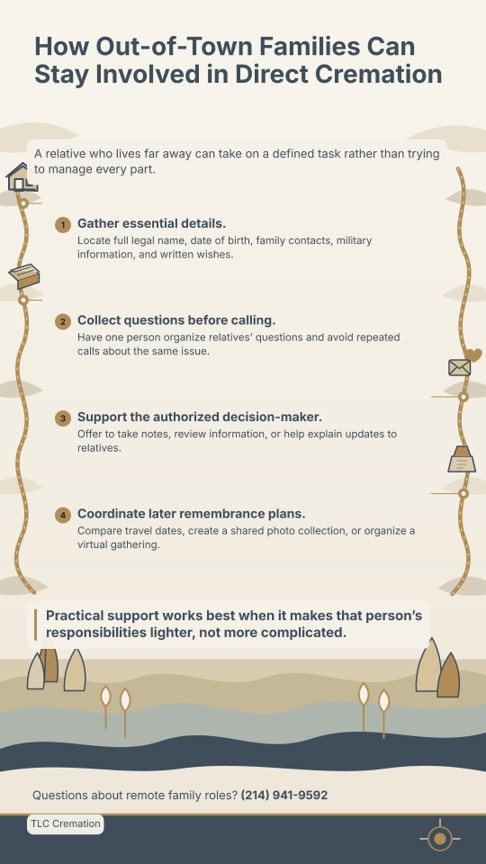
A relative who lives far away can take on a defined task rather than trying to manage every part of the process from a distance. Start by asking the arrangement contact what would actually be helpful. 

  1. Gather essential details. Locate the loved one’s full legal name, date of birth, family contacts, military information if applicable, and any written wishes that may guide the family. 
  2. Create one family contact list. Include the people who should receive updates, along with the best phone number or email address for each person. 
  3. Collect questions before calling. Ask relatives to send questions to one person, who can organize them and avoid repeated calls about the same issue. 
  4. Support the authorized decision-maker. Offer to take notes during calls, review information they receive, or help explain updates to relatives. 
  5. Coordinate later remembrance plans. A distant relative may be well suited to compare travel dates, create a shared photo collection, or organize a virtual gathering. 

          Authority and documentation needs can vary by family situation, so the person making arrangements should confirm what is needed directly with the provider. Practical support works best when it makes that person’s responsibilities lighter, not more complicated. 

          Infographic: How Out-of-Town Families Can Stay Involved in Direct Cremation

          Who Makes Decisions From Afar? 

          The person with authority to make final disposition decisions may be able to complete arrangements from afar, but the family should identify that person early. Waiting for every relative to agree can delay communication and place unnecessary strain on the person closest to the situation. 

          Authorized Decision-Making 

          The authorized decision-maker is the person recognized as able to give instructions and complete required arrangements. That person may not be the relative who lives nearest, pays for arrangements, or speaks most often in the family group chat. 

          Families should ask the provider which documents and authorizations are needed for their circumstances. It is wise to clarify this before relatives begin making assumptions or sharing different preferences. A calm, early conversation can prevent hurt feelings later. 

          Shared Family Input 

          Other relatives can still have a voice, even when they are not the person completing the arrangements. The key is to share input with the authorized decision-maker, rather than treating every preference as a separate instruction to the provider. 

          For example, siblings living in different states may agree that one sibling will handle formal communication, while the others collect obituary details, family photos, and ideas for a later gathering. That division respects everyone’s relationship while keeping the process clear. For more guidance on weighing simple arrangements, read about considerations before selecting cremation. 

          Communication Plans for Distant Relatives 

          A communication plan should fit the family, not create another task that feels impossible. The following options can help relatives choose a method that keeps updates organized. 

          Update MethodBest UseMain Benefit
          Group textShort updatesQuick and familiar
          Shared emailDetailed informationEasy to reference later
          Family contact personLarger familiesFewer repeated calls
          Scheduled video callMajor decisionsSpace for discussion
          Shared documentDates and tasksOne central record

          Choose one primary method and tell everyone which person will use it. If a family member has urgent concerns, they can direct them to the designated contact instead of expecting the arrangement provider to manage many separate conversations. 

          Questions for Cremation Services in Dallas 

          Clear questions can help distant relatives understand their role before confusion develops. Ask the provider how remote participation works, what information must come from the authorized decision-maker, and how the family will receive updates. 

          It is also reasonable to ask which selections are necessary now and which can wait until the family has had time to talk. Families should receive information in plain language, especially when grief makes it hard to process details quickly. TLC Cremation focuses on straightforward cremation arrangements and transparent information, which can be especially important when relatives are coordinating from different places. 

          Can Documents Be Handled Remotely? 

          Ask which documents may be completed online or through other remote methods, and which information the authorized person should have ready. Confirm how signatures, identification, and returned forms should be handled before assuming travel is necessary. 

          A family member living elsewhere can often help gather information, review forms with the authorized person, and keep a record of what has been completed. 

          How Will Updates Be Shared? 

          Ask who at the provider will communicate with the family and whether updates will go through one designated contact. Clarify what types of updates the family can expect and how to reach the provider if new questions arise. 

          This is also a good time to ask how the family will be notified once the cremation process is complete and what arrangements are available for receiving the cremated remains. 

          What Costs Should We Review? 

          Ask for a clear explanation of what is included in the selected arrangement and what choices are optional. Understanding each item before making a decision can help relatives avoid misunderstandings, especially when several people are contributing opinions from afar. 

          A provider should be able to explain the process without pressure. If something is unclear, ask for it to be explained again in simpler terms. 

          Meaningful Involvement After the Cremation 

          The end of the disposition process does not have to mark the end of family participation. A later gathering may give relatives time to travel, while a smaller local remembrance may feel right for those who cannot wait. 

          Families can share stories through a group video call, gather photographs for a digital album, write letters to be read privately, or choose a future date to meet in person. There is no required timetable for honoring a life. Some people need an immediate opportunity to connect, while others find that a quieter gathering weeks or months later feels more manageable. 

          Being out of town should not leave you feeling shut out of the goodbye. Thoughtful planning around cremation services Dallas, TX can give each relative a clear place in the process, whether that means helping now or joining a remembrance later. TLC Cremation is available to talk through family communication and arrangement questions at (214) 941-9592. 

          How to Plan a Family Gathering After Cremation

          A family gathering after cremation can be as simple as a meal, a few shared stories, or quiet time together. Families arranging cremation services Farmers Branch, TX do not need to decide every detail at once. Start by agreeing on what would feel helpful, then build only the plans that support that purpose.

          Key Takeaways

          • The gathering should reflect what close relatives need, not what others expect.
          • A meaningful remembrance may happen soon after cremation or at a later date.
          • The setting, guest list, and personal details work best when chosen together.
          • Clear roles and early boundary-setting can prevent added strain.
          • Final arrangements should be addressed before gathering plans take priority.

          Start with the Gathering’s Purpose

          Before choosing a date, food, or location, decide why the family wants to come together. Some families need a quiet space to sit with one another. Others want shared remembrance, spiritual reflection, or a larger celebration of a life that included many people.

          A gathering does not have to accomplish everything. Trying to create a reunion, ceremony, tribute, and reception all at once can leave the closest relatives exhausted. A simple purpose gives everyone a clearer way to make later choices.

          What Do Relatives Need Most Now?

          The first question is often whether relatives need comfort, connection, structure, or privacy. A family grieving a sudden loss may prefer a small visit without a planned program. A family that has been separated by distance may value a longer gathering where people have time to talk.

          Ask the closest decision-makers what would feel supportive, not what would look proper. Their answer may be different from what friends, coworkers, or extended relatives expect.

          A Shared Purpose Guides Later Choices

          A clear purpose helps settle questions that otherwise become stressful. If the goal is quiet connection, a private home or reserved room may fit better than a public event. If the goal is to hear memories from a wider circle, a more open setting and a simple speaking plan may make sense.

          When a loved one had shared wishes in advance, those wishes can provide direction. Families may also find it useful to discuss will language for cremation so expectations are clearer before a loss occurs.

          Timing Changes Who Can Participate

          A gathering can happen shortly after cremation, weeks later, or on a date that holds meaning for the family. The right timing depends on emotional readiness, travel needs, work schedules, and whether close relatives are able to make decisions without feeling rushed.

          There is no single deadline for remembrance. Waiting can give distant relatives time to attend and allow immediate tasks to settle. Holding a gathering sooner can give people a place to support one another while the loss is still very present.

          Should the Gathering Happen Right Away?

          Not necessarily. A prompt gathering may be right when family members need each other now, but it should not be chosen only because people assume it must happen immediately. The family can choose a small private gathering now and a broader remembrance later.

          Cremation arrangements and a family gathering are separate decisions. Completing one does not mean the other must follow on a fixed schedule.

          Flexibility Can Reduce Family Pressure

          Offer a date range before committing to one day. This gives key relatives room to say whether travel, caregiving, school, or grief itself makes participation difficult.

          For example, siblings might meet for a quiet dinner soon after arrangements are complete, then invite extended family to a remembrance several weeks later. That approach protects the immediate family’s need for privacy without excluding people who want to pay their respects.

          Choose a Setting That Supports Connection

          The best setting is one that matches the gathering’s purpose and the needs of those attending. Consider whether guests need easy access, a calm environment, room for conversation, or a place where people can come and go comfortably.

          Setting ApproachAtmospherePrivacyPlanning Demands
          Family homeFamiliar and relaxedHighShared hosting tasks
          Restaurant gatheringCasual and socialLimitedReservation and meal choices
          Community roomFlexible and organizedModerateMore coordination
          Place of worshipReflective and structuredVariesSchedule coordination
          Outdoor locationInformal and openLimitedWeather backup needed

          A home may feel comforting, but it can also place hosting work on someone who is grieving. A public setting can reduce cleanup and meal preparation, though it may not offer enough privacy for close conversations. Choose the place that makes connection easier, not the place that seems most impressive.

          Meaningful Details Shape the Experience

          Personal details can make a gathering feel true to the person being remembered. They do not need to be elaborate, expensive, or polished. The goal is to give people a few natural ways to recognize a life and participate at their own comfort level.

          • Choose one memory-sharing option, such as inviting guests to tell a short story, bring a photograph, or write a note for the family.
          • Select a few details that fit the person, such as familiar music, a favorite meal, a meaningful reading, or a display of hobbies.
          • Decide whether anyone will welcome guests or say a few words, then keep that role simple.
          • Leave open time for visiting, because personal conversations often become the most meaningful part of the day.

          Which Memories Invite Participation?

          Specific prompts are easier than asking people to “share anything.” You might invite stories about a favorite saying, a kindness people remember, a hobby, or a time the person made others laugh.

          Not everyone will want to speak publicly. Written notes, photographs, or quiet conversation give guests other ways to take part without pressure.

          Food, Music, and Objects Set a Tone

          Food can make a gathering feel like family time rather than a formal event. Music can create a reflective atmosphere, but it does not need to play continuously. A few familiar objects, photographs, or personal items may say more than a large display.

          Families considering a private goodbye before cremation may also want to read about what a private farewell involves. That choice is separate from a later family gathering.

          Leave Room for Unplanned Moments

          A full agenda can make grief feel managed rather than acknowledged. Keep any readings, music, or remarks brief enough that people can pause, talk, or step outside when they need to.

          Some guests may cry, others may laugh at a memory, and some may stay quiet. All of those responses can belong in a respectful gathering.

          Balance Participation with Family Boundaries

          A gathering can welcome others while still protecting the closest relatives’ needs. Decide early whether the event is for immediate family only, a wider circle of friends and relatives, or a mix of both with a separate private moment reserved for family.

          Children can be included when caregivers prepare them simply and honestly for what the gathering will be like. Virtual attendance may also help people who cannot travel, but it is wise to decide whether any personal sharing should remain off camera.

          Who Should Be Invited?

          The guest list should follow the gathering’s purpose. A quiet meal may be best for a small group, while an open remembrance can include coworkers, neighbors, friends, and extended relatives.

          If opinions differ, consider holding more than one moment of remembrance rather than forcing one event to meet every need. A private family gathering and a later open gathering can both be meaningful.

          Clear Roles Prevent Unnecessary Strain

          Choose a few people to handle practical tasks, such as welcoming guests, bringing food, managing music, or answering messages. The closest relatives should not have to coordinate every detail while they are grieving.

          It also helps to name one person who can gently redirect difficult conversations or handle last-minute questions. That small bit of structure may protect the family’s time together.

          Discuss Expenses Before Making Commitments

          Gathering plans can become more complicated when decisions are made quickly or assumptions go unspoken. A simple conversation about what matters most can keep the event within the family’s comfort level and prevent one person from carrying unexpected responsibilities.

          What Choices Can Affect the Budget?

          Several planning choices can change what a family needs to spend or organize:

          • The venue and whether it requires a reservation or rental
          • Food, refreshments, or a shared meal
          • Travel and lodging for relatives coming from away
          • Printed materials, flowers, music, or photo displays
          • Technology for virtual participation
          • Help with setup, cleanup, or transportation

          Start with the elements that support the gathering’s purpose. A meaningful event may require only a comfortable place, time to be together, and a few personal touches.

          Ask for Clear Pricing Information

          Before making a commitment, ask providers what is included and what may be added later. Put one person in charge of confirming details so relatives do not receive conflicting information.

          The same practical approach can help with cremation arrangements. TLC Cremation provides families with a straightforward process for making arrangements, allowing them to focus their energy on the decisions that matter most to their family.

          Cremation Arrangements Come Before Gathering Plans

          Cremation is a form of final disposition, and the required arrangement process should be completed before the family turns full attention to a gathering. Once those arrangements are in place, relatives can choose a date and format that fits their needs rather than feeling pushed into a rushed event.

          A post-cremation gathering is a family decision, not a requirement for honoring someone well. It can be informal, private, delayed, or shaped around a meaningful tradition. Check your local requirements if questions arise about the steps involved.

          Write down three priorities for the gathering this week, such as who needs to be present, what tone feels right, and how much planning your family can reasonably manage. As you weigh those choices together, cremation services Farmers Branch, TX can be one part of a calmer, more thoughtful plan. TLC Cremation is available to talk through cremation arrangements and family options. Call (214) 941-9592.

          Choosing Music That Reflects a Loved One at a Cremation Memorial

          Key Takeaways 

          • Start with songs and sounds that were truly part of your loved one’s life. 
          • Memorial music can be peaceful, joyful, spiritual, familiar, or quietly reflective. 
          • A short playlist with a clear purpose often feels more meaningful than a long list. 
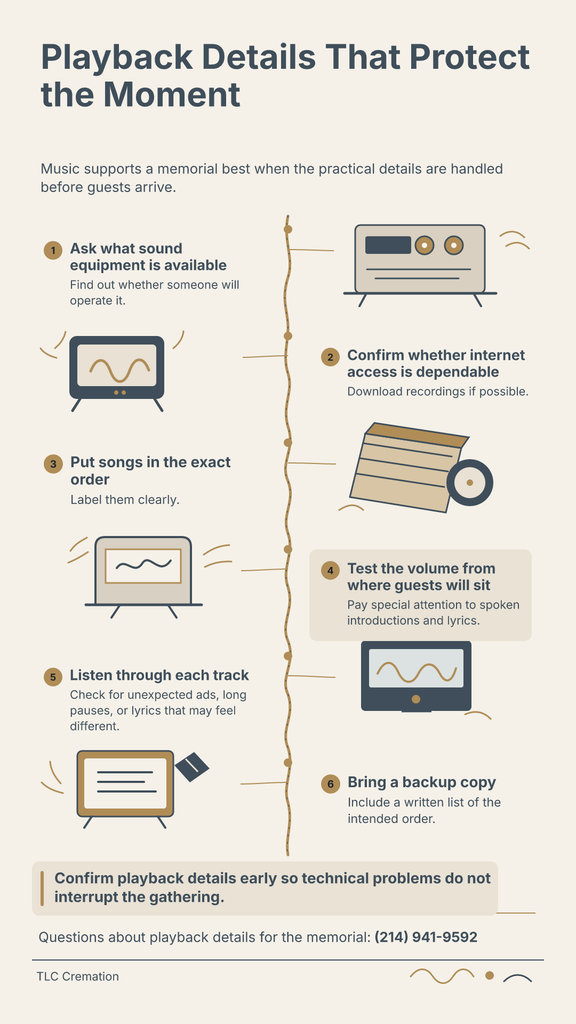
          • Confirm playback details early so technical problems do not interrupt the gathering. 
          • Give relatives a way to contribute while keeping one person responsible for final choices. 

          Music That Feels Personal, Not Performative 

          Meaningful music begins with recognition, not with finding the “right” funeral song. Families arranging cremation services Irving, TX can choose songs, instrumental pieces, recordings, or even periods of quiet that feel like the person being remembered. 

          A memorial held after cremation gives families time to think beyond the first songs that come to mind. A favorite Sunday-morning record, a hymn that mattered to them, a song they played while cooking, or a melody connected to a shared trip may say more than a standard selection ever could. Music does not have to be solemn to be respectful. 

          It can also be simple. One song at the beginning, one during a photo tribute, and one at the close may be enough. The goal is not to perform grief for guests. It is to create room for people to recognize a life and respond in their own way. 

          What Would They Have Chosen Themselves? 

          The best musical clues are often found in ordinary routines and relationships. Begin by asking what your loved one returned to again and again, rather than what others expect a memorial to sound like. 

          • Look through saved playlists, CDs, concert programs, or favorite radio stations. 
          • Ask relatives what song brings a clear memory of the person to mind. 
          • Consider faith traditions, cultural heritage, and music heard at meaningful family gatherings. 
          • Think about hobbies, work, military service, sports, travel, or a favorite era of music. 
          • Notice life chapters, such as a wedding song, music from a childhood home, or a song tied to a close friendship. 
          • Include a piece that reflects humor, warmth, or resilience if that was central to who they were. 

          A person who loved lively jazz, classic country, gospel, or a particular singer does not need to be represented by a slow instrumental simply because it is a memorial. The selection should feel honest. Guests often respond more deeply to a familiar song that sounds like the person than to music chosen only because it seems formal. 

          A Clear Emotional Arc for the Gathering 

          Music can quietly guide a memorial from arrival through farewell. That does not mean every song must carry the same emotion. A gathering may begin calmly, move into affectionate memories, and close with steadiness or even a little lift. 

          Start by deciding what guests need most in each part of the service. Arrival music can soften the awkwardness of entering a room where people are grieving. Music during readings, a video, or a spoken tribute can hold attention without competing with words. The final selection can leave guests with comfort, gratitude, peace, or a sense of the loved one’s personality. 

          There is no required number of songs. A shorter program may need only two or three carefully placed selections. A longer celebration may have music before and after the formal remarks, plus one or two focal moments. Allowing too many songs can make the gathering feel unfocused, especially if each one has a completely different mood. 

          For example, a family might welcome guests with a quiet instrumental piece, use a beloved sing-along song after a eulogy, and close with a hopeful recording the person often played at home. Those choices create movement without forcing a single feeling on everyone present. 

          Arrival Music Sets a Gentle Welcome 

          Arrival music should be low enough for greetings and quiet conversation. Choose something familiar or calm, but avoid lyrics that may pull attention before the gathering begins. 

          This is also a good place for instrumental music, especially if relatives are still arriving or the start time may shift slightly. The purpose is not to fill every silence. It is to make the room feel cared for. 

          Tribute Moments Hold Focus 

          A tribute song works best when it has a clear role. It may accompany photos, follow a reading, or give guests a moment to sit with what was shared. 

          If lyrics carry an important message, provide the song enough space to be heard. Avoid placing a lyric-heavy recording under a speaker’s remarks, since guests may struggle to follow either one. 

          What Feeling Should Guests Carry Home? 

          Choose the closing music based on the feeling you want guests to leave with, not only the sadness of the day. A final song can offer peace, connection, gratitude, faith, or a reminder of the person’s spirit. 

          That choice may be quiet and reflective, or it may be warm and familiar. A closing song does not need to resolve grief. It simply gives the gathering a thoughtful last note. 

          Which Music Source Fits the Memorial? 

          The right music source depends on the setting, who will manage it, and how much participation your family wants. Ask the venue or provider what equipment and timing are workable before finalizing the plan. 

          Music SourcePersonal MeaningPractical NeedsBest Fit
          Curated recorded playlistFamiliar songs and artistsDevice and playback accessFlexible gathering
          Live musicianPersonal performanceScheduling and spaceQuiet tribute moment
          Congregational singingShared participationLyrics and song leaderFaith-centered service
          Instrumental background musicCalm, less distractingSpeaker setupGuest arrival
          Family member’s recordingStrong personal connectionAudio quality checkBrief remembrance

          Recorded music is often easiest to manage, but it still needs a designated person who knows when each selection should begin. Live or shared music may feel especially meaningful when the setting and participants support it. The best option is the one that fits the family’s plan without creating extra stress. 

          Shared Choices That Reduce Family Tension 

          Portable speaker and unlabeled vinyl records on a sunlit kitchen counter beside a wooden spoon.

          Different musical preferences are normal, especially when relatives are grieving in different ways. One person may want traditional hymns, while another wants the music their loved one played every day. Neither response is automatically wrong. 

          Invite a few close relatives to submit one or two suggestions, along with a sentence about why each song matters. Then appoint one person, or a small planning group, to make the final sequence. This keeps the process open without turning the playlist into a vote on every detail. 

          Set gentle boundaries early. You might reserve one place in the program for a spiritual selection, one for a personal favorite, and one for a closing piece. If a requested song does not fit the tone or timing, it can still be played privately at a family meal or included in a shared online playlist. Families with broader arrangement questions may also find guidance in these common cremation questions. 

          Playback Details That Protect the Moment

          Music supports a memorial best when the practical details are handled before guests arrive. Confirm arrangements during the formal planning process required for final disposition in Texas, rather than assuming a device or venue setup will work as expected. 

          • Ask what sound equipment is available and whether someone will operate it.
          • Confirm whether internet access is dependable, then download recordings if possible.
          • Put songs in the exact order they will be used and label them clearly.
          • Test the volume from where guests will sit, especially for spoken introductions and lyrics.
          • Listen through each track for unexpected ads, long pauses, or lyrics that may feel different in the memorial setting.
          • Bring a backup copy on another device or storage option, along with a written list of the intended order.

            Music can be part of a memorial held days or weeks after cremation, and that extra time can make planning more manageable. If the larger process still feels unclear, this guide to the first steps after a death may help families organize questions before making decisions.

            Infographic: Playback Details That Protect the Moment

            Choosing a Playlist Families Can Stand Behind 

            If you are still unsure, choose fewer songs and give each one a purpose. Ask whether the selection sounds like your loved one, supports the people gathered, and can be played reliably in the chosen setting. Those three questions are usually enough to narrow the list. 

            A thoughtful playlist for cremation services Irving, TX does not have to please every person in exactly the same way. It should offer a true reflection of the life being honored. TLC Cremation is available to talk through memorial choices and family questions at (214) 941-9592.